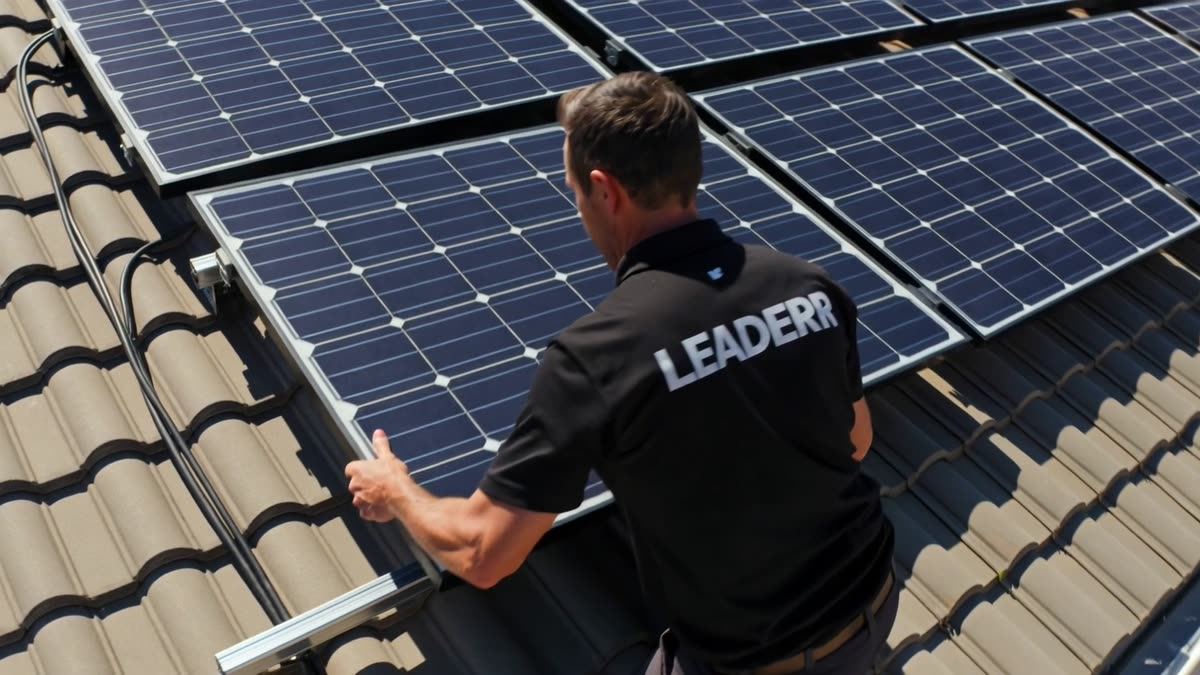
- Commercial Solar Cape Town covers solar for offices, warehouses, factories, retail, restaurants, hotels, schools and body corporates.
- Businesses use most of their power during the day, which is exactly when panels produce, so commercial systems often need less battery storage than homes.
- Compare proposals from commercial solar contractors on system yield, equipment, price and monitoring.
Send 12 months of electricity bills, your supply type (single or three-phase) and the roof area available.
Get Commercial Solar QuotesWho Commercial Solar Suits
| Property | Typical load profile | Common approach |
|---|---|---|
| Offices | Weekday daytime aircon, IT, lighting | Grid-tied array sized to daytime base load |
| Warehouses and logistics | Large roofs, moderate load | Large grid-tied array, possible export under the City's rules |
| Factories | High daytime load, motors, three-phase | Large three-phase array, often with power factor and demand review |
| Retail and shopping centres | Long trading hours, refrigeration, HVAC | Rooftop and carport arrays, battery for evening peak |
| Restaurants | Refrigeration all day, cooking peaks | Hybrid system to protect cold rooms during outages |
| Hotels and guesthouses | Hot water, laundry, 24-hour load | Solar PV plus heat pumps, battery for backup |
| Schools | Daytime term load, holidays low | Grid-tied array, export or credit during holidays where allowed |
| Body corporates | Common-area lighting, gates, pumps, lifts | Common-property system, sometimes per-unit metering |
How Commercial Systems Are Sized
The starting point is your interval data or at least 12 months of bills. The installer matches the array to your daytime base load so most of the generation is used on site. Oversizing without an export arrangement wastes energy. Three-phase supply is standard for most commercial sites, and inverters must balance output across phases.
| Array size | Approx. daily output (year average) | Roof space | Indicative installed price (grid-tied, excl. battery) |
|---|---|---|---|
| 30kWp | 120 - 150 kWh | 150 - 200 m² | R330,000 - R480,000 |
| 50kWp | 200 - 250 kWh | 250 - 330 m² | R520,000 - R780,000 |
| 100kWp | 400 - 500 kWh | 500 - 650 m² | R1.0m - R1.5m |
| 250kWp | 1,000 - 1,250 kWh | 1,250 - 1,600 m² | R2.4m - R3.5m |
Prices are indicative and include VAT. Larger systems generally cost less per kWp, typically R10,000 - R16,000 per kWp. Battery storage for commercial sites is priced separately and depends heavily on the backup and peak-shaving requirement.
Get proposals that show expected yield, self-consumption and payback for your site.
Compare Commercial Solar InstallersReturn on Investment
Payback depends on your tariff, how much of the solar energy you use on site, system cost, financing and maintenance. Businesses with high daytime usage tend to see faster payback than those with evening loads. Treat any payback figure as an estimate and ask each installer to show their assumptions: tariff, annual tariff increase, yield per kWp, degradation and self-consumption. Businesses should also ask a tax practitioner about capital allowances such as Section 12B, rather than relying on an installer's summary.
Battery Storage for Businesses
- Backup. Keeps tills, servers, cold rooms and security running during outages.
- Peak shaving. Reduces demand charges on tariffs that bill for peak kVA.
- Evening use. Shifts daytime solar into early evening trading hours.
- Critical loads only. Most sites back up a subset of circuits to keep battery cost reasonable.
Operational Requirements
- Engineering sign-off. Larger systems need design and sign-off by a registered engineering professional, and the City's SSEG process applies. See SSEG registration.
- Structural check. Older warehouse and factory roofs may need an engineer to confirm they can carry the load.
- Roof condition. Replace ageing roof sheeting first; lifting a commercial array later is expensive.
- Access and safety. Work at height, fall protection and site induction for contractors.
- Lease terms. Tenants need landlord consent, and landlords should agree who owns and maintains the system.
Monitoring, Maintenance and Expansion
Commercial systems should be monitored daily, with alerts for inverter faults and yield drops. Plan for scheduled cleaning and inspections: see solar maintenance and solar panel cleaning. Design with expansion in mind so extra inverters or batteries can be added without rewiring the whole system. Solar system upgrades covers adding capacity later.
Cape Town Considerations for Businesses
Large flat and low-pitch roofs are common in Cape Town's industrial areas and suit ballasted or rail-mounted arrays, but wind uplift from the south-easter must be designed for. Coastal and port-adjacent sites need corrosion-resistant components. Summer generation is strong, which suits businesses whose aircon load peaks at the same time.
For quotes from contractors who do commercial work, use Solar Installers Western Cape.
Commercial Solar Questions
How much does commercial solar cost in Cape Town?
Grid-tied commercial systems typically cost R10,000 - R16,000 per kWp installed, so a 100kWp system runs about R1.0m to R1.5m. Batteries add to this.
What is the payback period for commercial solar?
It varies with tariff, usage pattern, system cost and financing. Ask each installer for a payback model with their assumptions shown.
Do commercial solar systems need batteries?
Not always. Sites that use most of their power in the day often start grid-tied and add batteries later for backup or peak shaving.
Does a commercial system need City approval?
Yes. Grid-connected systems must be registered with the City of Cape Town and signed off by an appropriately registered professional.
Can a tenant install solar on a leased building?
Only with the landlord's written consent. Agree ownership, maintenance and what happens at the end of the lease before installation.
Can a body corporate install solar on common property?
Yes, subject to the required trustee or owner resolutions under the scheme's rules. Common-property systems usually supply shared areas first.
Is monitoring necessary for commercial solar?
Yes. A fault that stops one inverter can go unnoticed for weeks without monitoring, which costs far more than the monitoring itself.
Related Services for Businesses
Solar Installers Western Cape is a free quote-comparison service. Installation, repair and maintenance work is carried out by the independent solar installers that quote you, and your contract is with the installer you appoint. Ask each installer for a written, itemised quote, the registered electrician who will issue the Certificate of Compliance, and their equipment and workmanship warranty terms before appointing anyone.
Commercial Solar Cape Town. Compare commercial solar proposals on yield, price and support.
Get 5 QuotesGet Commercial Solar Quotes
Send your bills, supply type and roof size, and commercial solar contractors will quote directly.
Free to use, no obligation. Your request goes to LEADERR APPROVED solar installers covering Cape Town and the Western Cape, who quote you directly.
Client Reviews
Powered by leaderr